Networking is a necessary, time-intensive and often tedious part of business. I lean more to being an introvert so sparking conversations with complete strangers is a skill I continue to work on. I do like meeting new people and hearing their stories. Almost more than that, I like the beginning stages of collaboration where ideas are percolating. Networking offers an abundance of this potential. However, there is one thing that has the potential to derail any promising business collaboration.
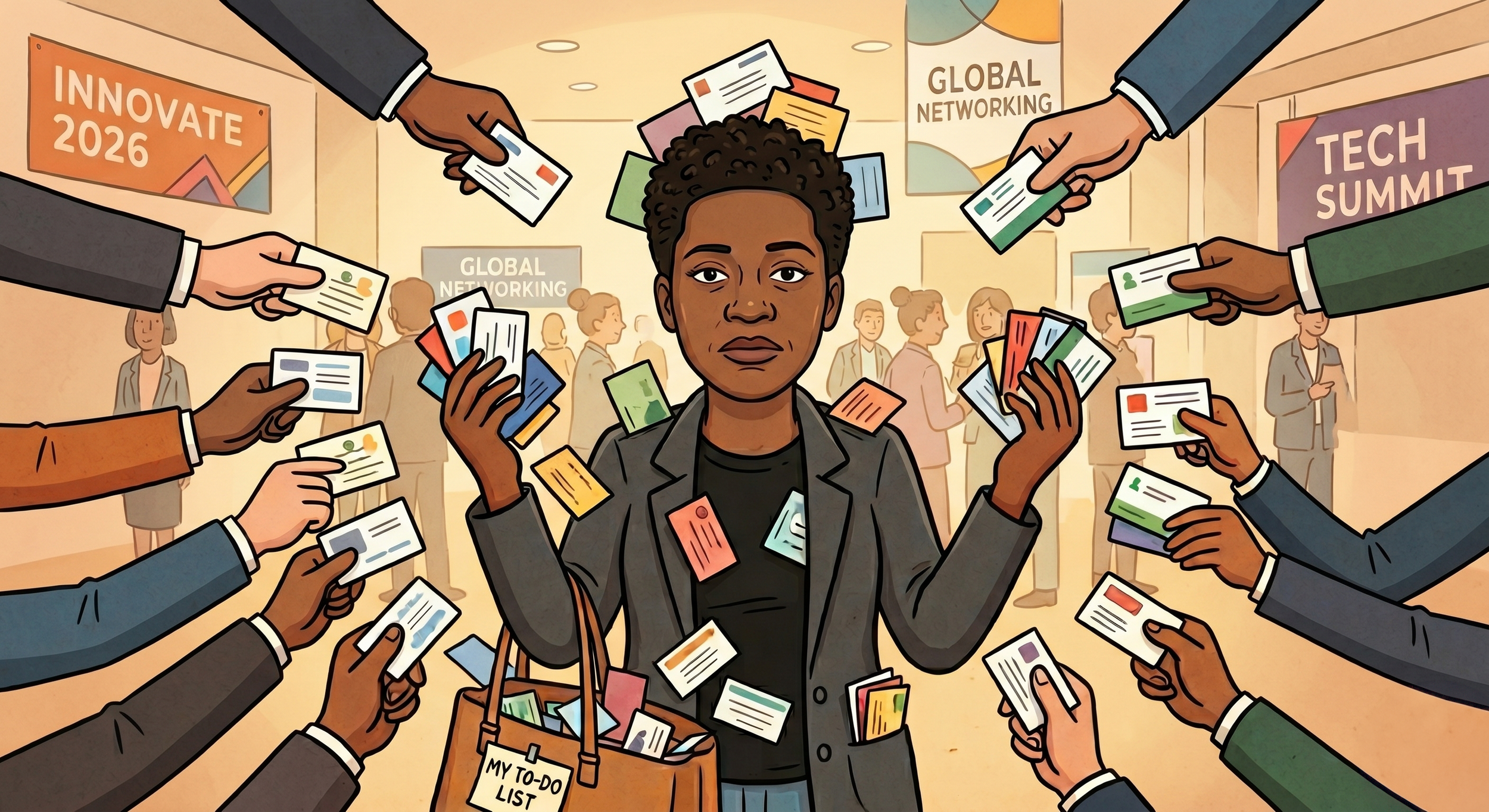
There comes a point in a networking conversation when things have been flowing well and we are nearing the natural end to our time together. We have identified similar interests and potential ways we can collaborate. The air is thick with wonderful potential. I see them start reaching into their pocket or bag and my heart sinks because I know what's coming.
They thrust their hand towards me containing a beautifully designed (sometimes) business card. In those few moments, my mind races around the most polite way to say, “no thank you”. But I look into their pride-filled eyes as if they are presenting me with their first-born child and know that rejection of their card will be a devastating blow to the burgeoning relationship we have just initiated.
Reluctantly, I take the card with a pained smile and place it in my bag and sigh to myself at the burden I have just been given. This little piece of card has just added another thing to my to-do list.
In the digital age and in a time where we are trying to make our professional lives more efficient to make way for more personal pursuits, are business cards a help or a hindrance? I would suggest that little rectangle is often more hassle than it’s worth: every unclear design choice, unnecessary contact point and manual data entry step is a barrier to a progressive working relationship and an efficient work life.
Ensure the contact information is clear and legible
If you insist on handing out business cards, the first consideration is design. For the love of all that is good and holy, the information needs to be clear and legible. No overcomplicated fonts or decorative choices that obscure the necessary details. This is for two main reasons.
Overcomplicated fonts or styles increase the likelihood that I mistype the information when I go to add it to my contact list. I have to spend extra time searching for the correct information or I may just give up altogether.
The clearer the text, the easier it is for apps like Google Lens to identify the text and add the details to my contact list automatically.
Better still add a QR code, that links to a vCard with your details that can be automatically saved to the recipient’s device. Or, as we’ll look at next, point people to the key information you want them to know about you. Using a dynamic QR code means you can update the URL attached to the QR code without having to reprint your cards. You can also measure how often people are scanning your QR code to analyse how often your card is being utilised.
For one or two cards you receive, manual data entry isn’t the biggest issue but imagine you have spent a day or even a weekend at a conference collecting business cards. You or your support team will have to spend hours transcribing and checking the information. Time that could be better spent on more productive things like napping.
Direct people to where you want them to go
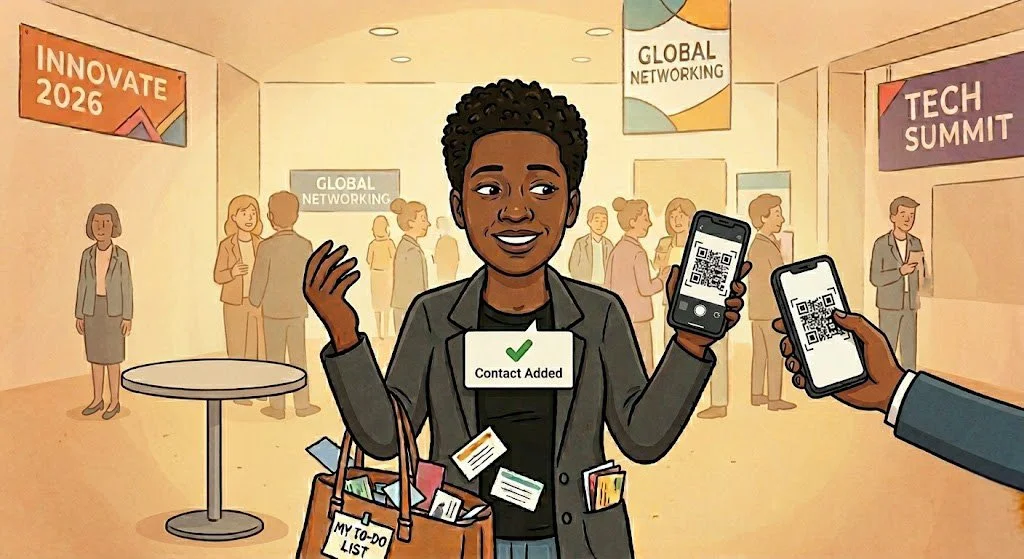
A traditional business card may include your name, contact number(s), email address, website, LinkedIn, social media profiles….
What is the most effective way for people to interact with you? Are you comfortable with having back and forth conversations on LinkedIn or would you prefer email? Do you want people to call you at any time of the day or would you prefer that you can set aside time to speak with someone? How often do you check your Instagram inbox? Is there a chance you will miss any messages that come through there?
If you must use a business card, make sure the information works for you as much as it works for the other person. Only include contact information that allows your business to run smoothly and reduces any missed communication which could equal missed business.
Keep the conversation going
Unless I purposefully add the contact information to my phone and take the time to call or send an email, there is a risk that relationship never gets going. Also, I could lose the card and all of that information is gone.
One way to ensure information is collected immediately is to set up a hidden page on your website or a landing page on Kit, Mailchimp or Hubspot with boxes for First Name and email address. Give your new networking friends your device open to the page or have a QR code on your phone they can scan to access the landing page and let them fill in the details.
In your CRM software, add a tag such as “Networking contact” and create an automated email to be sent maybe 2, 10 or 24 hours after they are tagged.
Keep the email light. Something like:
Hi <First Name>
It was great to meet you this evening.
I would love to continue our conversation. Please feel free to book in some time for a virtual coffee by [clicking this link].
In the footer, you can add whatever contact information works for you plus links to anything else you feel is relevant like recent articles or a link to your About You page. You could even include links to surveys so you can get a better understanding of who they are and what they may need before you even talk again.
(If you are going to add them to your mailing list for regular mailouts, be sure to include a clear opt-in button so they can actively consent to marketing communications.)
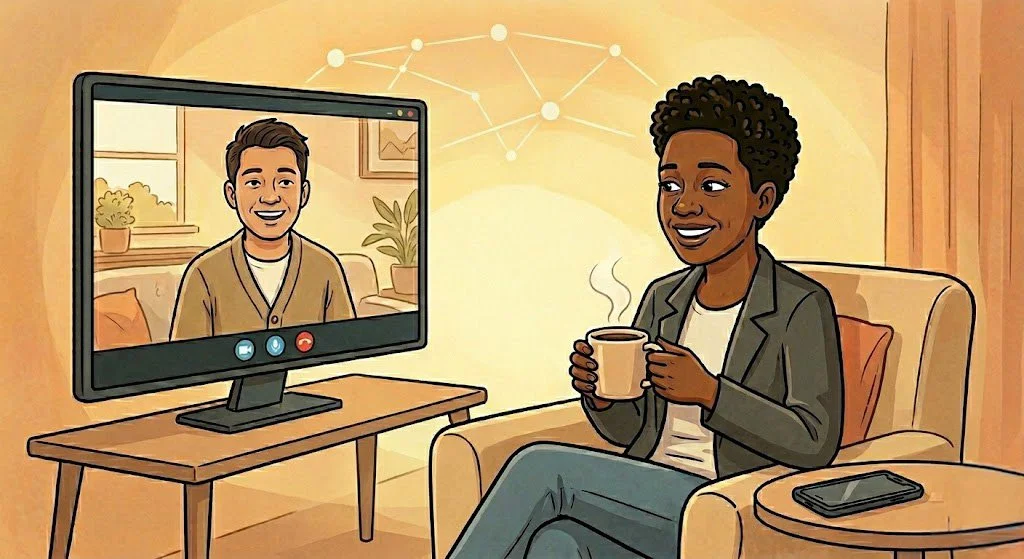
Traditional business cards are not completely evil and of course they can be great ways of sharing contact information. However, giving me a business card that requires an excessive amount of time for me to extract the information or that doesn’t give me a clear guide on how we can continue to collaborate, is like giving me an oar whilst I’m in the middle of a river without a boat. Thanks but not to be ungrateful, that wasn’t the most effective choice. The aim is to move from the conference room to a virtual coffee or even hopefully the beginning of a project in the smoothest way possible.
If you are a traditional business card user, do you feel your cards give the recipient a clear and efficient way to contact you? Additionally, how do you ensure you can maintain communication with that person once they have walked off with your card?
Leave your comments below